








Large Stock Available
Domestic & Commercial
Installation Within 10 Days
Quality
Of Work
Parking Security
Price Match Guarantee


What to Know Before Choosing Driveway Bollards
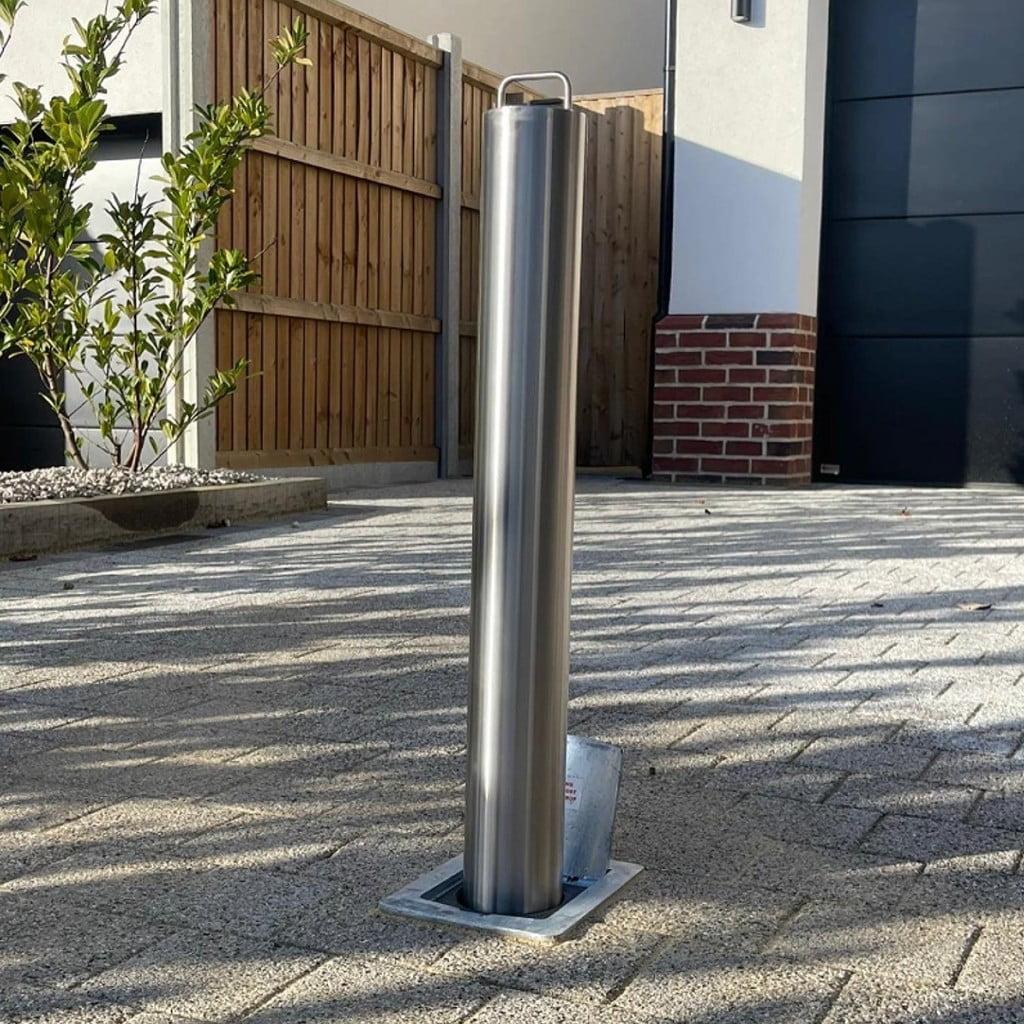
Driveway bollards provide a visible, physical layer of security between your vehicle and the road. When the right bollards are selected and installed properly, they can help deter vehicle theft, restrict unauthorised parking and make it much harder for someone to remove a vehicle from your property.
There are several types to choose from, including manual telescopic bollards, lift-assisted models, removable security posts and fully automatic systems. The best option will depend on how often you use your driveway, the vehicles you want to protect, the ground conditions and your available budget.
At Bollard Security, we supply and install a wide range of
driveway bollards and posts
throughout the UK. Our range includes round and square telescopic bollards, stainless-steel and powder-coated finishes, lift-assisted options and products with independently assessed locks.
Before arranging a driveway bollard installation, it helps to understand how the different products work and what the installation will involve.
What Are Driveway Bollards Designed to Do?
Driveway bollards are designed to create a physical obstacle across a vehicle entrance or in front of a parked car. Even if someone gains access to the vehicle or its keys, a raised bollard can make it much more difficult to move the car from the driveway.
Security bollards can also be used to discourage unwanted parking, protect motorhomes and campervans, or stop unauthorised vehicles from entering private land.
For many customers, driveway bollards offer a practical alternative to gates. They take up less space, can be less visually intrusive and allow the entrance to remain open when the bollards are lowered or removed. They work best as part of a wider driveway security setup. Good lighting, alarms, cameras and secure doors may still be important, depending on the property and the level of risk.
Are Driveway Bollards Worth It?
Driveway bollards can be a cost-effective way to strengthen security, particularly if you regularly park a valuable vehicle outside or live in an area where vehicle theft is a concern.
Unlike a sign, alarm or visible camera, a security bollard creates a physical obstruction. Anyone attempting to remove the vehicle would first need to overcome the post, which can increase the time, noise and effort involved.
They may be particularly useful if:
- Your driveway is wide or exposed
- Conventional gates cannot be installed
- You park a valuable car, van, motorhome or campervan outside
- Vehicle theft is a concern in your area
- You want additional protection without permanently closing the entrance
The right level of security will depend on what you are trying to protect. A lightweight parking post may be enough to stop casual parking, while a heavier telescopic bollard will generally be more appropriate where vehicle theft is the main concern.
If you are unsure which level of protection you need, speak to our team. We can talk through the driveway layout, the vehicle being protected and the types of bollards that fit your budget.
Which Types of Driveway Bollards Can You Choose?
We supply several types of driveway bollards, each offering a different balance of security, convenience and cost.
Manual Telescopic Bollards
Manual telescopic bollards retract vertically into a casing beneath the driveway. When you need access, you unlock the bollard and lower it into the ground. When the driveway needs to be secured, you pull the post back up and lock it into position.
Telescopic bollards are a popular residential option because they provide a substantial physical barrier without remaining above ground when they are not in use. Once lowered, the driveway stays clear for vehicles and pedestrians.
Our telescopic bollard range includes round and square models in different heights, diameters and finishes. Options include the D4, S4, S5, R5, R8, SQ5 and SQ8, allowing us to recommend a unit suited to different driveway layouts and security needs.
Many models include an integrated push-button lock and are supplied with coded keys. Selected bollards also use independently assessed locks, providing additional evidence of their resistance to common attack methods.
Lift-Assisted Telescopic Bollards
Lift-assisted telescopic bollards operate much the same way as manual models, but the internal mechanism reduces the effort needed to raise the post. This can be helpful when choosing a larger or heavier security bollard. It may also suit customers who use the driveway several times a day or would find a standard manual post difficult to lift.
We offer lift-assisted models in round and square designs, including heavier-duty security posts with stainless-steel and powder-coated finishes.
Although lift assistance adds convenience, the bollard still needs to be locked and lowered manually. Customers looking for operation from inside the vehicle may prefer an automatic system.
Removable Driveway Bollards
Removable bollards fit into a ground socket and can be lifted out completely when access is required. They can work well where the entrance is only opened occasionally or where there is not enough depth for a telescopic casing. They may also suit shared areas, service entrances or spaces that need to remain clear for long periods.
The main consideration is what happens to the post once it has been removed. It needs to be carried away and stored safely, which may be less convenient if the driveway is used frequently. Before choosing a removable bollard, it is worth checking the weight, locking method and whether there is a suitable place to store it.
Fixed Security Bollards
Fixed bollards provide permanent protection and cannot be lowered or removed during normal use. They are often fitted beside a driveway, around vulnerable walls or in areas where vehicles should never be allowed to pass. They can also be used to narrow an entrance or guide vehicles towards a controlled access point.
Fixed security bollards are usually more straightforward than retractable systems, but their placement needs careful planning. A badly positioned post may restrict access or create an unnecessary obstacle for pedestrians.
Automatic Driveway Bollards
Automatic bollards rise and lower using a battery-powered, electromechanical or hydraulic system. They can usually be operated from inside the vehicle using a remote control, keypad, smartphone or another access-control system.
This makes them a convenient option for customers who use the driveway regularly and do not want to leave the car to operate a manual post.
Automatic systems have a higher product and installation cost because they may require wiring, power supplies, controls, safety equipment and more extensive excavation.
We supply automatic driveway bollards as well as manual and lift-assisted options, so we can advise on the system that best suits how the property is used.
How Much Security Do You Need?
Not all driveway bollards provide the same level of protection; the strength and security of a bollard can be affected by:
- Its diameter, wall thickness and raised height
- The materials and construction used
- The quality of its lock
- The design of the concrete foundation
- Its resistance to cutting, drilling or tampering
- Any independent testing completed on the product or lock
A larger post can create a stronger visual deterrent, but size alone does not prove that a bollard is impact resistant. Standard driveway security bollards should not be confused with crash-rated or anti-ram products.
For example, some residential telescopic bollards are designed primarily to deter vehicle theft and provide a physical obstacle. They are not intended to stop a moving vehicle travelling at speed. Where impact protection or ram-raid defence is required, we can recommend products designed and tested for that specific purpose.
What Does Sold Secure Mean?
Sold Secure is an independent organisation that tests security products using defined attack methods. Approved products may display the Sold Secure mark if they meet the required standard.
Some telescopic bollards use locks assessed through Sold Secure, but certification should always be checked for the exact product being considered. It should not be assumed that every bollard in a range has the same approval.
You may also see products described as insurance approved or insurance recommended. Installing security bollards may support a discussion with your insurer, but it does not guarantee a reduction in your premium.
Before ordering, it is worth asking your insurer whether they require a particular product, lock or certification.
How Many Driveway Bollards Do You Need?
The number of bollards required depends on the driveway width and whether a vehicle could pass between or around them. A narrow driveway may only need one centrally placed bollard. Wider entrances may require two, three or more posts to close the available route effectively.
Spacing of around 1.2 to 1.5 metres is sometimes used as a general starting point, but there is no single layout that suits every property. The final position should account for the width of the vehicles, fixed boundaries and safe pedestrian access.
Placing too few bollards may leave enough room for a car to pass. Placing more bollards than necessary can increase the installation cost and make daily access less convenient.
What Should You Know About Installation?
How Deep Should a Bollard Be Buried?
The required excavation depends on the selected product, the length of its underground casing, the foundation specification and the drainage needed below the unit.
For telescopic bollards, the excavation normally needs to accommodate the complete casing, the concrete foundation and a suitable drainage base. Automatic bollards may require additional depth or space for wiring, drainage and associated equipment.
The visible height of the bollard does not tell you how deep the hole needs to be. A product that rises 500mm above the driveway may have a much longer below-ground casing. We always follow the technical dimensions for the selected bollard. Installing a unit at the wrong depth can affect its strength, alignment, drainage and operation.
What Does Driveway Bollard Installation Involve?
A professional driveway bollard installation starts with choosing the correct location for each post and checking what may be beneath the surface.
Before any digging is carried out, our engineers use professional Cable Avoidance Tools to check for underground electricity cables and other utilities. We then carefully cut or lift the driveway surface and excavate to the depth required for the chosen bollard.
The base is prepared to support drainage, and the unit is positioned and aligned before concrete is placed around the casing. Once the bollard is secure, we reinstate the surrounding surface as neatly as possible and test the lock and operation.
The precise installation process varies depending on whether the driveway is made from block paving, concrete, tarmac, resin or another material.
How Do Ground Conditions Affect Bollard Installation?
Ground conditions can affect both the installation method and the overall cost, with common issues including underground services, poor drainage, clay soil, a high water table, reinforced concrete, sloping ground and specialist driveway surfaces.
Telescopic bollards need effective drainage because rainwater should not be allowed to remain inside the underground casing. A gravel base may be suitable in some locations, while other properties may require a different drainage solution.
Concrete also plays an important role in supporting the unit and holding it securely in position. Depending on the product and site conditions, the concrete may need time to cure before the bollard is used.
How Long Does Driveway Bollard Installation Take?
A standard bollard installation typically takes around 90 minutes, although the actual time depends on the product and the driveway. Installing several telescopic bollards will naturally take longer than fitting one unit. Concrete surfaces, difficult excavation, underground services and drainage work can also extend the installation time.
Automatic bollards usually require more work than manual products because wiring, power supplies and control equipment may need to be installed and tested.
Our own engineers carry out the bollard installation rather than passing the work to subcontractors. Where electrical work is required for an automatic system, it is completed by our in-house electricians.
Can I Put a Bollard on My Driveway?
In most cases, you can install a driveway bollard on private land that you own, although further permission or advice may be needed if the property is listed, located in a conservation area, leasehold or subject to a shared-access agreement. You may also need approval if the work affects a pavement, public highway, dropped kerb or vehicle entrance.
Tenants and leaseholders should speak to the property owner or management company before arranging installation. Where there is any uncertainty, check with your local planning authority or highways department before work is carried out.
How Much Does It Cost to Install Driveway Bollards?
The cost of a driveway bollard installation varies depending on the type of bollard, the number of units required and the work involved in preparing the driveway.
Manual, lift-assisted and automatic bollards are priced differently, while the final installation cost can also be influenced by the driveway surface, excavation requirements, drainage, underground services and access to a suitable power supply.
Some products may be available as supply-and-installation packages, while others are priced separately with installation quoted once the site requirements are understood.
For an accurate figure,
contact our team
with details of your driveway and the type of security you are looking for. We can recommend suitable options and provide a quotation based on the product, layout and installation requirements.
Choose Driveway Bollards with Bollard Security
The right driveway bollards should provide a suitable level of security without making everyday access more difficult than it needs to be.
We supply manual, lift-assisted, removable, fixed and automatic security bollards for homes and businesses throughout the UK. Our range includes cost-effective residential products, stainless-steel telescopic bollards and heavier security posts with independently assessed locks.
Our directly employed engineers manage the driveway bollard installation from the initial underground service check through to fitting, testing and customer handover.
Ready to improve your driveway security? Contact Bollard Security today for tailored product advice and an installation quotation.