





Large Stock Available
Domestic & Commercial
Installation Within 10 Days
Quality<br>Of Work
Parking Security
Price Match Guarantee
How to prevent keyless car theft and keep your car safe
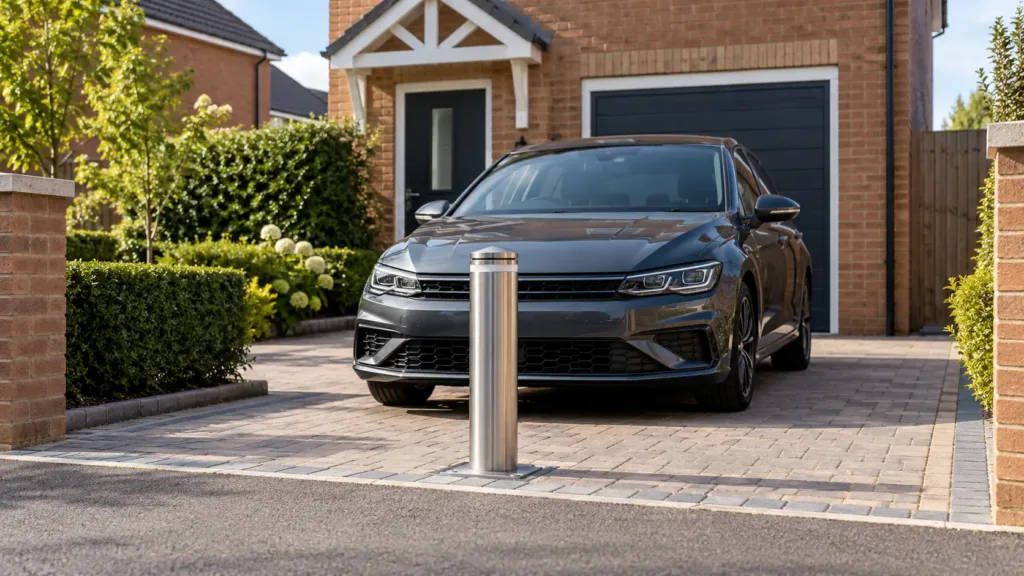
Car theft remains a recurring concern for vehicle owners, and one that may well play a part in your own day-to-day concerns about your car too. If you park your car in your driveway overnight, it’s understandable that you want to protect it as effectively as possible.
Modern vehicles have sophisticated security systems, but car thieves have sophisticated methods of their own. Keyless entry, relay attacks, key theft and electronic vulnerabilities can all create opportunities for criminals. At the same time, more traditional methods of vehicle theft remain a risk if a car is left unlocked, its keys are easily accessible, or it lacks additional physical security measures.
The good news is that several highly effective ways can make your vehicle a less attractive and harder target. From simple changes to where you keep your car keys to steering wheel locks, security cameras and driveway bollards, a layered approach can help reduce the risk of vehicle theft.
Why are cars stolen from driveways?
A driveway can seem like a secure place to park, particularly compared with leaving your vehicle on the street. However, a driveway doesn’t automatically protect your car from theft.
For an opportunistic thief, a vehicle parked outside a house can be a convenient target, especially if it is easy to access and has few visible security measures. In some cases, criminals may simply look for an unlocked vehicle or keys left somewhere accessible. In others, they may specifically target vehicles with keyless entry systems.
These days, many cars operate on keyless systems, which is brilliant and convenient during the day-to-day hustle of commuting to work and taking care of tasks. Unfortunately, as technology gets more sophisticated, so do the means in which to beat it.
So it’s worth thinking about your car’s security from several different angles. How easy is it to access your vehicle? Where are the keys kept? Is the driveway well lit? Could a thief simply drive the car away if they managed to unlock and start it?
Answering these questions can help you identify where an additional layer of protection could make a difference.
How does keyless car theft work?
Keyless car theft, sometimes called relay theft, targets vehicles that let the driver unlock and start the car without physically using the key fob.
A thief can use electronic equipment to relay or amplify the signal between a keyless vehicle and its key fob. If the system is fooled into believing the key is close to the car, the doors may unlock and, depending on the vehicle, the engine may start.
This means your car can potentially be targeted while the key remains safely inside your home.
Essentially, if you’re keeping your car keys in a bowl by the door, in the hallway, or even a jacket pocket, as many people do, the signal can be easily boosted by one of these devices. Keeping the key close to the front door or a window can therefore increase the opportunity for a thief to exploit the signal.
How to prevent keyless car theft
If your vehicle has keyless entry, you can take several straightforward steps.
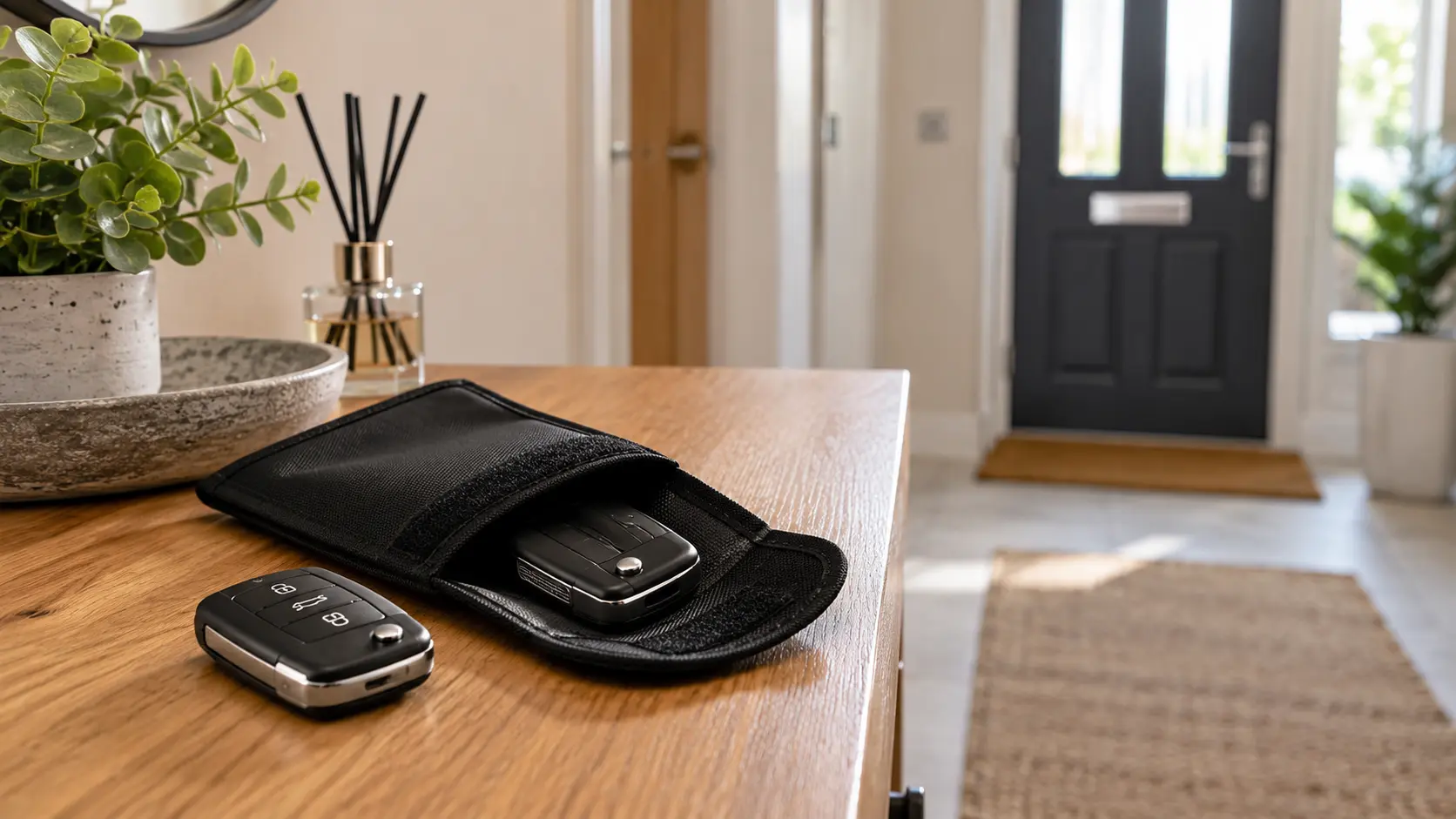
Keep both your main and spare key fobs well away from the car when you’re at home. Police advice also recommends storing keyless fobs away from doors and windows and using a signal-blocking pouch, such as a Faraday bag. If you use one, check periodically that it’s still working effectively.
You should also check whether your vehicle manufacturer lets you turn off the key fob’s wireless function when you aren’t using it. Some modern vehicles have this option.
Remember that protecting the key doesn’t necessarily prevent the vehicle from being stolen by other means. That’s why physical security can provide an important extra layer of protection.
1. Always lock your car
It sounds obvious, but one of the simplest ways to prevent car theft is to lock your vehicle whenever you leave it unattended.
The police recommend locking your vehicle even when it’s parked in your driveway and checking that the windows and sunroof are closed.
Don’t assume your car has locked simply because you’ve pressed the button on the key fob. Electronic devices can potentially interfere with the signal between the fob and vehicle, preventing the car from locking. After locking your car, check the doors manually or use another reliable method to confirm that they’re secure.
Also avoid leaving the engine running when the car is unattended. Apart from increasing the risk of theft, this can also affect your insurance cover.
2. Keep your car keys secure
Your car keys can be one of the most important parts of your vehicle’s security.
Don’t leave keys in the car, and avoid storing them somewhere that’s easily accessible from outside the property. This includes keeping them away from doors, windows, and letterboxes where possible. If you have a keyless vehicle, consider using a signal-blocking pouch for both the main and spare key fobs.
If you’ve bought a second-hand car, it may also be worth asking whether the existing keys have been reprogrammed. Police guidance recommends reprogramming keys when buying a second-hand vehicle as an additional precaution.
These relatively simple measures can help reduce the risk of key theft and electronic keyless attacks.
3. Use a steering wheel lock or other anti-theft device
Electronic vehicle security isn’t your only option. A physical anti-theft device can provide another obstacle for a thief to overcome.
A steering wheel lock is one of the most recognisable examples. It physically restricts steering wheel movement and, importantly, provides a highly visible deterrent. Even if a criminal bypasses the vehicle’s electronic security, they still face another physical barrier.
Other anti-theft devices are available too, including immobilisers and tracking systems. Some modern vehicles already incorporate sophisticated security features, while aftermarket systems can provide additional protection depending on the vehicle.
The key is to choose equipment appropriate for your car and have it installed correctly, with professional installation where required.
4. Park strategically
Where and how you park can also influence the risk of vehicle theft. If you have a garage, using it can provide a significant additional layer of physical protection. Police advice recommends using and locking a garage when available.
If your car has to stay on the driveway, think about how easy it would be for a thief to access and remove it. For example, parking behind another vehicle can make a quick getaway more difficult. Turning the car wheels towards a kerb or another obstruction may also make manoeuvring harder if someone manages to start the car.
However, you shouldn’t rely on these measures as your only form of protection. A determined thief may still be able to move a vehicle if they have sufficient time and access. The objective is to make your car less convenient to steal and encourage thieves to move on to an easier target.
5. Make your driveway a less attractive target
Traditional methods, such as locking doors and parking your car in the safety of a driveway, can still be effective, but they don’t always offer as much protection as they once did.
You can make your driveway less appealing to opportunistic thieves by improving visibility and making security measures obvious.
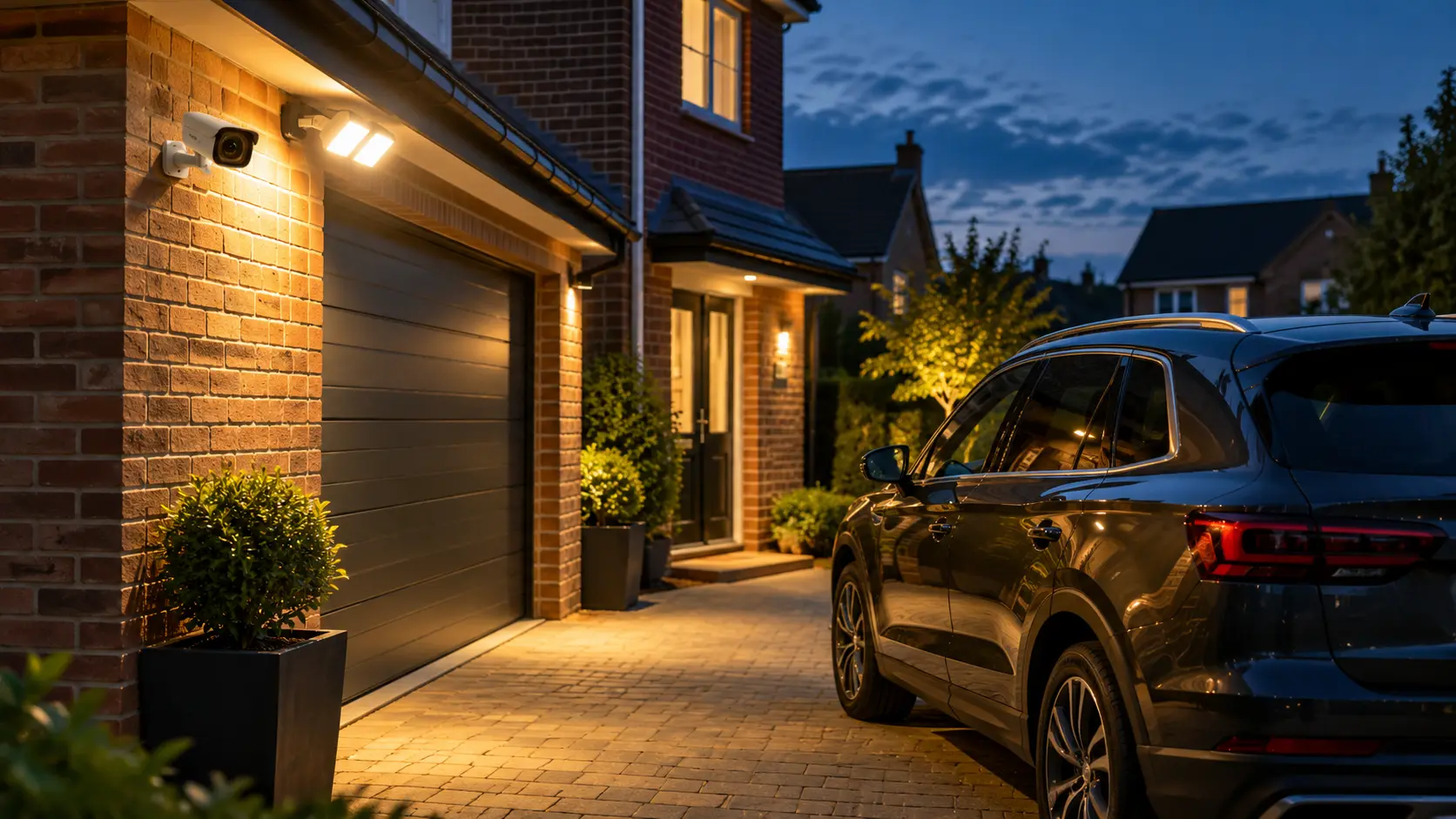
Motion-activated lighting can illuminate the driveway when someone approaches, while security cameras or CCTV can allow you to monitor activity around your property. A dashcam with parking mode may also provide useful footage of suspicious activity around your vehicle. Some police forces specifically recommend security cameras, CCTV, motion-activated lighting, and parking-mode dashcams to help deter criminals and provide evidence if a vehicle is targeted.
You should also avoid leaving valuables visible inside your car. Bags, electronic equipment, tools, and other items can make a vehicle more attractive to thieves even if they aren’t interested in stealing the car itself. Good lighting, clear visibility, and an uncluttered driveway won’t provide a cast-iron guarantee, but they can help keep your car safe in a more secure environment.
6. Consider a driveway bollard
If you’re specifically looking to prevent a car from being stolen from your driveway, a physical barrier provides a visual deterrent and deserves serious consideration.
Security cameras and alarms can deter thieves, while steering wheel locks and immobilisers can make a vehicle harder to operate. But a properly installed driveway bollard tackles the problem differently: it can physically prevent the vehicle from being driven away.
Keyless car theft may be on the rise, but there is a solution to this problem – telescopic bollards.
Many thieves may be able to overcome electronic vehicle security and access the car. But a physical bollard can also provide an additional barrier between the stolen vehicle and the road.
This makes driveway bollards particularly relevant for keyless vehicles. Even if someone manages to unlock and start the car, they still have to overcome the physical barrier protecting the driveway.
What type of bollard should you choose?
There are several types of driveway bollards, including fixed, removable and telescopic models. For residential driveways, telescopic bollards can be particularly practical because you can raise them when the car is parked and lower them when you need to drive over the driveway.
Telescopic bollards (like our R5 Telescopic Bollard) will prevent any vehicle from being stolen, regardless of whether someone is able to boost your key’s signal and unlock the car.
The key is choosing a bollard that provides the right level of physical security for your vehicle and installing it correctly.
For example, a residential driveway may have different requirements than a commercial site where you need a higher level of vehicle protection.
7. Add security cameras and motion sensors
CCTV and surveillance cameras can provide another useful layer of protection around a driveway. A visible camera can deter potential thieves, while motion sensors and alerts can notify you when activity is detected around your vehicle.
Some modern systems let homeowners monitor their driveway remotely on a smartphone, while cameras with recording capability can preserve footage that may help police after an incident.
Lighting can complement this approach. A well-lit driveway gives thieves fewer opportunities to operate unseen and makes suspicious activity easier to spot.
However, view cameras as part of a wider security system, not a guarantee against theft. Their main value is deterrence, monitoring, and potentially providing evidence.
8. Consider a vehicle tracking device
A tracking device won’t necessarily prevent your car from being stolen, but it can provide an additional layer of protection if the vehicle is taken.
Depending on the system, a tracking device can help establish the vehicle’s location after a theft and may help with its recovery. This is particularly relevant for higher-value vehicles or cars that are attractive targets for organised criminals.
Again, it’s worth thinking in terms of layers. A tracker, immobiliser, steering wheel lock, and driveway bollard each address different parts of theft risk, rather than relying on one piece of equipment to do everything.
A layered approach is the best way to protect your car
No single security measure can guarantee your vehicle will never be stolen. Instead, effective car theft prevention is about making the vehicle harder to target, harder to access, and harder to drive away.
Start with the basics: lock the car, keep the keys secure, don’t leave valuables on display, and use your garage or a secure area if you have one. If you have a keyless vehicle, use a signal-blocking pouch and check whether you can turn off the keyless function when the car isn’t in use.
From there, consider additional measures such as a steering wheel lock, immobiliser, tracking device, CCTV, motion-activated lighting, and physical driveway security.
Here at Bollard Security, we’re dedicated to helping our customers achieve peace of mind, and deter any potential theft from happening.
A driveway bollard can be particularly useful because it provides a physical barrier that doesn’t depend on the car’s electronic security system. It can complement other measures and provide an extra layer of protection when your vehicle is parked at home.
If you’re looking for an effective way to prevent your car from being stolen from your driveway, our range of driveway security bollards includes options for different properties, vehicles and budgets.
We carry huge stock of all types of bollards, including parking bollards and parking posts. Check out our products online to find the best fit for your home.
If you need help choosing the right bollard or have questions about installation, you can always call one of our in-house experts on 01535 509001 – we’re always happy to advise!