





Large Stock Available
Domestic & Commercial
Installation Within 10 Days
Quality<br>Of Work
Parking Security
Price Match Guarantee
What’s the difference between electric and manual bollards?
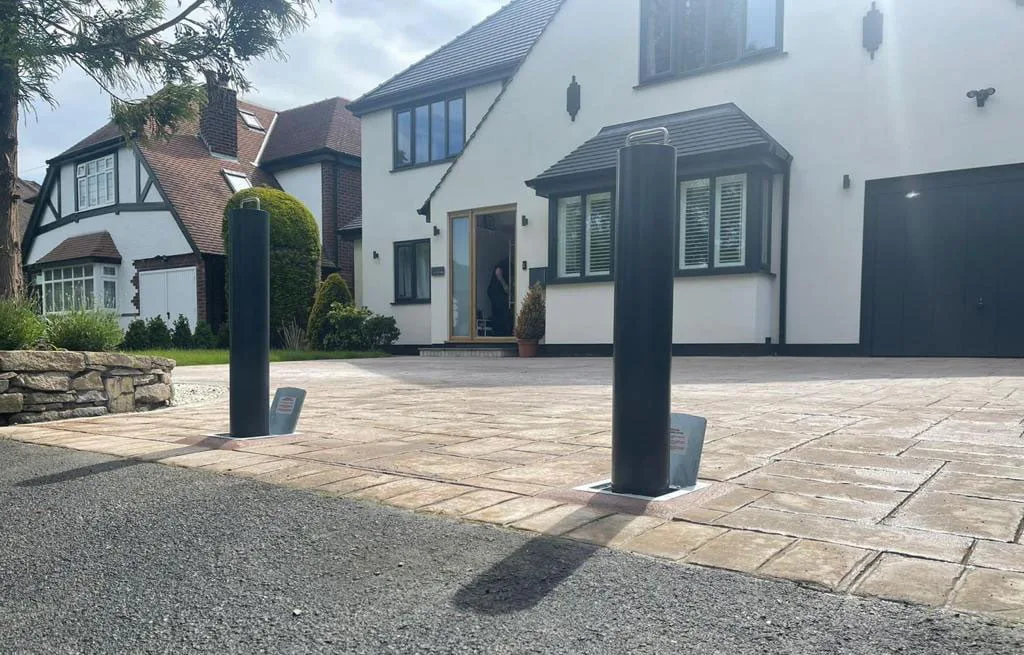
As you’ll know if you’ve taken even a brief look around our site, there are lots of different types of bollards for driveways. Since each of them have their own distinct set of characteristics, strengths, and intended applications, that can make the process of deciding which one to choose for your driveway far from a straightforward decision.
The main difference between electric and manual bollards
Manual and electric bollards can both be used in domestic and commercial applications. Manual bollards are often chosen for residential driveways and private parking spaces because they offer a straightforward way to restrict vehicle access without a powered mechanism. They typically require someone to leave their vehicle to unlock, lower or remove the post.
Electric bollards, often referred to as automatic bollards, can be raised and lowered using a remote control or a compatible access control system, depending on the model. This makes them particularly useful where vehicles need frequent access, whether at a busy commercial entrance or a private driveway.
Security performance is not determined by whether a bollard is manual or electric. Some models are designed to deter unauthorised parking or vehicle theft, while others are built and tested for more demanding security requirements. The specific product and its installation are what matter.
Manual bollards
There are plenty of different types of manual bollards, but we’ll just cover three of the main categories here.
Telescopic bollards

As the name suggests, the design of telescopic bollards allows them to collapse in on themselves to provide flexible protection of a driveway. When lowered, the post retracts into a casing in the ground, leaving the entrance clear for vehicles. They’re amongst the most popular choice for driveways because they’re easy to use and highly effective. Lift-assisted driveway bollards are also available, with an in-built mechanism that can significantly reduce the lifting weight.
These retractable bollards are well suited to driveways that need occasional access. Before installing them, however, the available excavation depth, drainage and any underground services should be considered.
Removable bollards

These are just as flexible as telescopic bollards, and can equally be raised and removed in a matter of seconds. But the main difference, obviously, is that rather than disappearing into the ground, these bollards are simply lifted out and taken away. When they’re installed, they sit within an outer casing set at a relatively shallow depth into the ground. Their resistance to impact depends on the particular product, rather than whether it is removable or telescopic.
So, why choose them over telescopic bollards? Well, they’re mainly designed for areas of ground that have a high water table; in other words, the level at which the soil or gravel is saturated with water. In these conditions, a below-ground telescopic housing may require additional drainage considerations. Removable bollards are also useful if you have pipes or wiring underneath your driveway, which affects the depth to which it can be excavated. When not in use, the removed post needs to be stored somewhere suitable.
For occasional access to a driveway or parking area, removable bollards can offer a practical alternative to retractable bollards, particularly where a deeper ground casing is unsuitable.
Fixed bollards

These are sometimes referred to by the alternative moniker of static bollards. Unlike removable or retractable designs, fixed bollards remain in place once installed. Instead, they’re often used for applications like demarcation in car parks, or protecting car dealerships from ram-raid attacks. They’re very occasionally used by residential homeowners who want to permanently block off an area in their property from vehicle access.
They can also help separate vehicles from pedestrian spaces, depending on the layout and the selected product.
Fixed security bollards vary considerably in strength and construction. Where protection against vehicle collisions is essential, the relevant tested specification should be checked rather than assuming every fixed bollard provides the same level of resistance.
Electric or automatic bollards
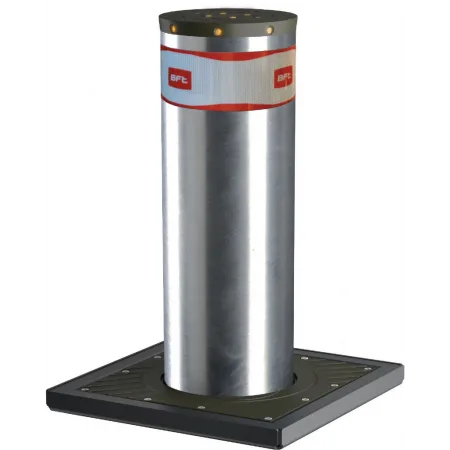
One of the most obvious distinguishing features of electric (or automatic) bollards is that they don’t need to be physically operated. Instead they can be remotely controlled using a device like a key fob, or programmed to raise and lower themselves at certain times of day to account for peak traffic times. They can be used at residential properties as well as commercial locations, industrial sites and entrances where regular vehicle access needs to be managed.
Automatic systems can be particularly convenient when an entrance is used several times a day. Depending on the model, controls may include remote fobs, keypads or other access control equipment, allowing authorised vehicles through without someone manually moving the bollard.
As with manual bollards, the level of security depends on the individual model. An automatic operating mechanism does not automatically make a bollard stronger or crash-rated. What’s more, some automatic bollards can be augmented with LED lighting systems to provide early warning and improve safety for passing vehicles and pedestrians (while at the same time warding off potential intruders).
Because these products incorporate powered components, automatic bollard installation also needs to account for the electrical supply, safe operation and ongoing servicing.
Which type of bollard should you choose?
The best option depends on what you need the bollard to do. For a driveway that is opened only occasionally, manual telescopic or removable bollards may be a straightforward choice. If you use the entrance several times each day, electric bollards can make access more convenient.
For private parking spaces, a manually operated parking post may be sufficient to discourage unauthorised parking. Fixed bollards, meanwhile, are suited to areas that should remain closed to vehicles, including sections of car parks and pedestrian routes.
It is also worth considering the practical requirements of installing bollards. Ground conditions, drainage, underground services and the space available for vehicles can all affect which model is appropriate. Where a specific level of impact protection is needed, compare the relevant product specifications and test evidence before making a decision.
Frequently Asked Questions
What are the different types of bollards used for?
Different types of bollards serve different purposes. Fixed bollards can define pedestrian zones or protect parts of a site where vehicles should not enter. Removable or retractable bollards allow occasional vehicle access, while automatic bollards are often better suited to entrances requiring convenient access throughout the day. Parking bollards can also help prevent unauthorised parking in allocated spaces.
Are stainless steel bollards and decorative bollards suitable for security?
Stainless steel bollards are often selected for their finish and appearance, while decorative bollards, including some cast iron designs, can complement the surrounding environment in public spaces or outside commercial buildings. However, aesthetic appeal does not establish a bollard’s protective capability. If security is the priority, check the actual construction, installation requirements and any relevant test rating rather than relying on its visual appeal.
How can bollards help protect pedestrians and manage traffic?
When appropriately specified and positioned, traffic bollards can help separate pedestrian walkways from vehicle routes, support traffic management and control traffic flow around car parks, loading bays and pedestrian areas. These physical barriers can also help guide pedestrian movement and restrict vehicular access to particular spaces. The layout must still allow for safe pedestrian traffic and any necessary access for emergency vehicles.
What is the difference between crash-rated bollards and ordinary security bollards?
Crash-rated bollards are products that have been tested against defined vehicle-impact criteria. They may be considered for higher-risk locations, including entrances to some government buildings and other sites where protecting buildings from vehicular impact is a specific requirement. Not all security barriers or anti-ram bollards have a verified crash rating. If robust protection is required, ask for evidence of the exact product’s testing and installation specification.
What should I consider when choosing bollards for a car park or business entrance?
The right bollard depends on your security needs, how often vehicles enter and whether the site also carries significant foot traffic. Fixed posts may suit permanently restricted areas, while automatic bollards can help control access where regular vehicle movements are expected. Consider the surrounding environment, vehicle sizes and pedestrian flow before selecting a system. In high-traffic areas, the practicality of everyday operation and safe access is especially important.
Can bollards be installed on an existing driveway or concrete surface?
Often, yes, but the feasibility depends on the chosen product and the ground beneath it. A bollard installation may require excavation, a suitable foundation, drainage and checks for buried services, even where the existing surface is concrete. Retractable and automatic designs generally need space for below-ground components. A site assessment helps determine whether the proposed bollard and installation method are appropriate.